
Busan, South Korea (September 18th, 2025)
Text and photos: Hyunji Choi
Official movie still: Stephanie Stål Axelgård
Special thanks to Jieun Lee (aka Cranberry)
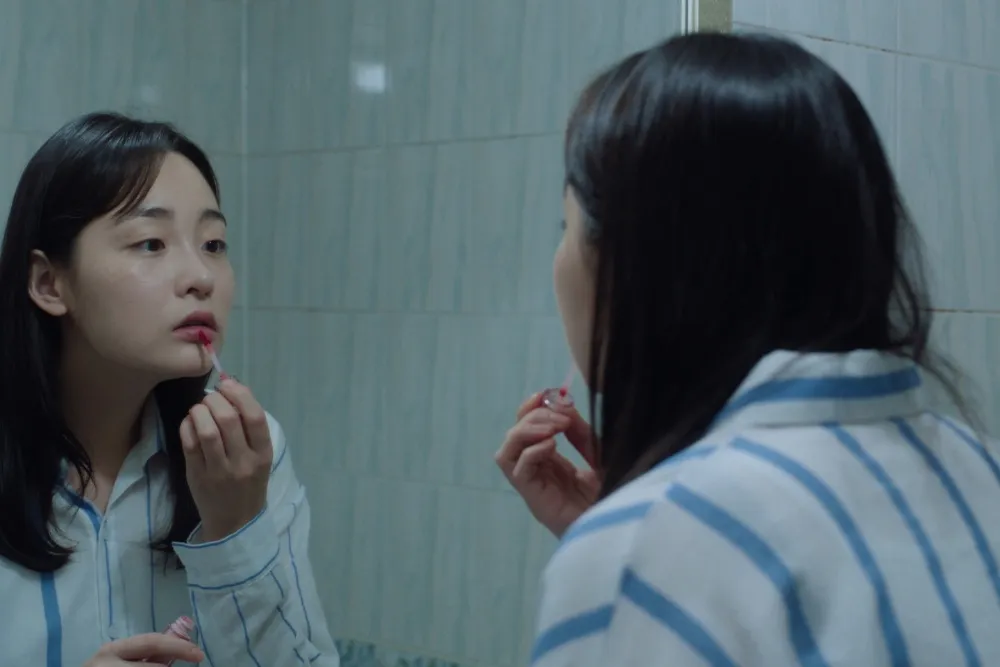
Well, I’m not too familiar with how it’s been in other countries, but the films Jonas has scored have been screened a few times in my country, South Korea.
The film he worked on called President was screened at the 13th DMZ International Documentary Film Festival in September 2021, which was held in Goyang-si, near Seoul. However, it was shown late on a weekday evening, which meant I was still stuck at the office with no possibility to attend.
In May 2023, President was briefly screened at the Africa Film Festival in Seoul and Busan, but I couldn’t attend then either due to health issues at the time. I missed two opportunities, but I think I’ll be able to see this film at another Korean film festival within the next ten years, haha. Films about Zimbabwe are rare. I’d love to see President at a Korean theater if I have the chance.
I heard that another film Jonas worked on called Hana Korea was getting released, and it was set to have its World Premiere at none other than the Busan International Film Festival in September 2025. As I was still on parental leave throughout 2025, I wanted to go see this film myself if I got the chance. Oh boy, I was so naive, right up until September.
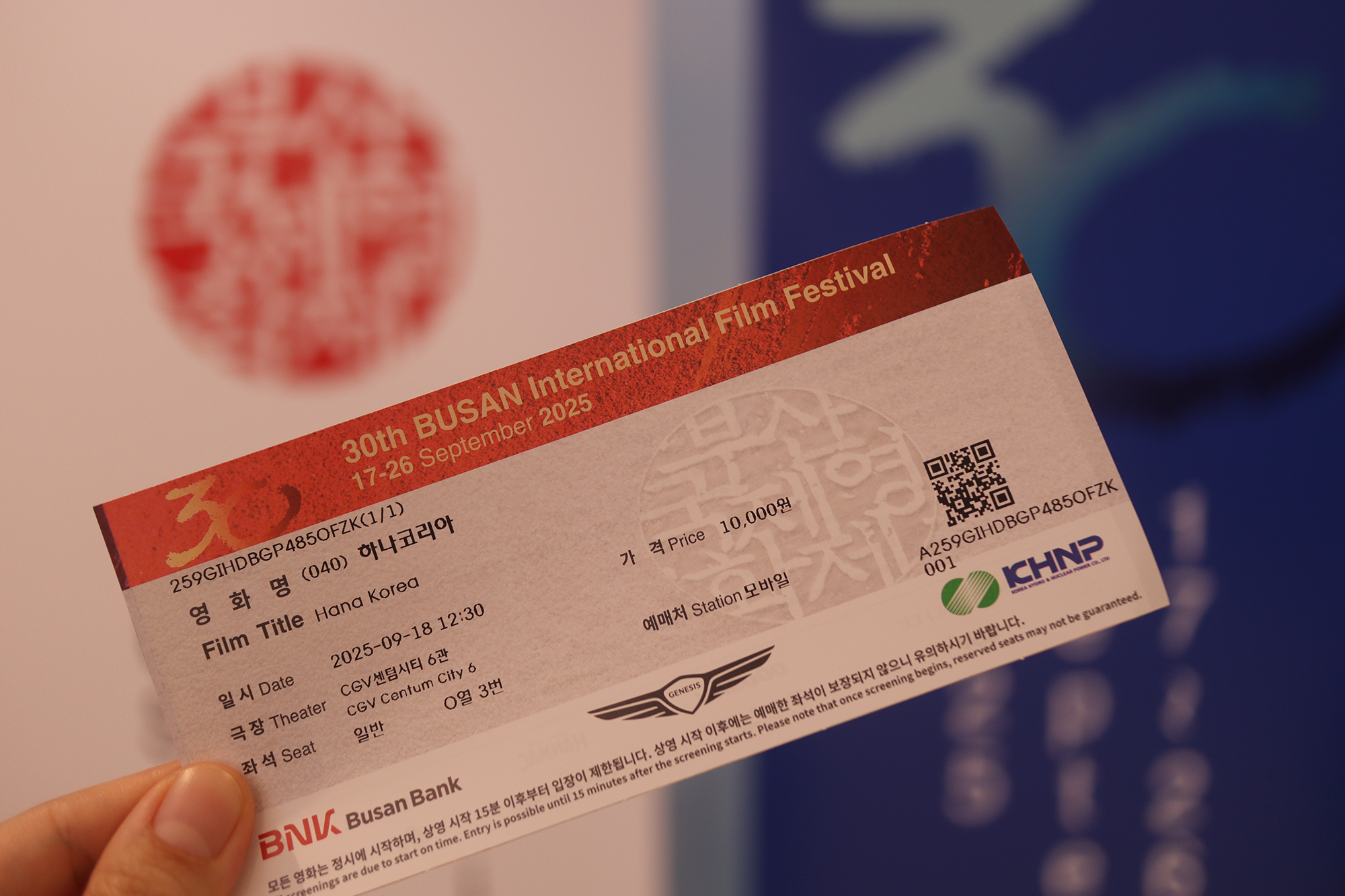
Tickets went on sale starting at 2 PM on September 9th, 2025, and… oh my goodness. I couldn’t get a single ticket until 6 PM on September 17th. Almost every film had sold out within 10 minutes of the tickets going live. From September 9th, I spent 24 hours straight refreshing the booking page trying to get tickets, and I developed insomnia. It’s December now, and I still haven’t recovered from that illness. These days, if my phone rings at 3 AM, I can still answer it no problem, haha (just kidding). I had no idea that getting tickets to BIFF would be this difficult. On the night of September 17th, I just barely managed to snag one ticket from a cancellation for a screening on the 18th. Even though my seat was way in the back corner of the theater, I was so overjoyed when I finally succeeded in booking my ticket.
So, when it comes to Seoul and Busan in Korea — for those unfamiliar with Korean geography, you can think of them as being similar to Vancouver and Toronto in Canada. The two regions are far apart from each other, so the best way to travel between them is to take a high-speed bus, train, or plane.
During BIFF, which is Korea’s largest film festival, even the KTX — Korea’s fastest high-speed rail — was nearly sold out. So even though I live near Seoul, I ended up having to ride the very last car, in the very last seat, as though I was in the tail car of the movie Snowpiercer. Well, whatever. At least I still got my hands on my movie ticket!
Hana Korea was screened a total of three times, on September 18th, 20th, and 24th, 2025. A total of 800 people saw it, with 300, 300, and 200 in the audience each time. All three screenings were sold out. On the 18th and 20th, attendees could meet the actors and director Frederik Sølberg in person for a Q&A session after the film. As well, on the 18th, we got to see the actors again on an outdoor stage after the movie ended.

Since not many people have seen the movie yet, I unfortunately will need to explain the general plot to help you understand. Heads up for spoilers from here onwards.
Mm, I do advise you to prepare a handkerchief before watching the movie. It’s quite sad. When they started rolling the end credits, everyone in the audience, including me, was crying.
To summarize the 103-minute film in one line, it depicts the story of a daughter who crosses over to South Korea for the sake of her mother (who’s in North Korea), but can never go back to North Korea.
The main setting of the film, officially called The Settlement Support Center for North Korean Refugees and abbreviated as Hanawon (House of Unity), is a facility with a level of national security equivalent to the South Korean presidential office. They probably couldn’t film at the real location for security reasons. This facility helps refugees from North Korea adapt to life in South Korea. The name Hanawon comes from the Korean words Hana, which means “one,” and Won, which means “facility.” The name of the facility itself expresses a longing for reunification.
Between the lead actors Minha Kim, Seohyun An, and Jooryoung Kim, I thought Jooryoung Kim looked the closest to an actual female North Korean defector. I had expected female defectors in their late teens to early twenties to be depicted similarly to Jung Hoyeon’s character from Season 1 of Squid Game, but the film didn’t go in that direction, so the protagonists felt unique. The film simultaneously portrays the difficulty of surviving the world on your own as a young woman, and the unique challenges that North Korean defectors face in adjusting to life in South Korea. And sadly, it is based on a true story.
Acoustic piano pieces are interspersed throughout the film. There’s also a pretty upbeat, in-your-face K-Pop song that comes on in one scene. I chuckled at the Korean National Gymnastics song, which every Korean knows.
There were a few scenes where the protagonist would play the drums alone at Hanawon to soothe herself, which I found a bit hard to understand, because the film never directly portrays what kind of life she’d lived in North Korea. Learning to play the drums in North Korea would require a very comfortable family background, and she didn’t seem to have that.
Night views of Seoul frequently come on screen. At times, those night views seem to comfort the protagonist, while at others, they come across to her as too cold, indifferent, and harsh. These scenes seemed to have been primarily shot at Namyeong Station and Seoul Station.
When the protagonist finally begins her nursing practicum at Sahmyook University, I couldn’t help but think of the poem “Hometown” by the North Korean poet Paek Sŏk (Baek Seok). I wondered if the director or screenwriter knew of this poem when making the film.
Hmm, poor Jonas had his name Romanized in Korean as “YONASU BI-JE-RE” in the film’s ending credits, which isn’t quite accurate. As the film’s end credits roll, we can finally hear Jonas’ voice. The ending theme is called Hike To The Sun, and it’s very beautiful. This song also features a Korean female vocalist who sings with Jonas, and includes lyrics in Korean.

While there were no questions about the film itself when the film ended, the questions that Korean audience members asked the director were as follows:
-Did you have any difficulty filming in Korea, and if you wanted to know more about Korea, what story would you have wanted to add?
-What made the director, who’s from Denmark, become interested in Korea?
-Since it’s a small film, it’s unlikely to have large viewership numbers — is that okay?
-The Danish band Iceage once participated in the DMZ Peace Train Music Festival in 2019.
The Irish band U2 has expressed a desire to perform in a unified Korea if the opportunity arises. Is a “unified” Korea more special only to foreigners?
If you ask most South Koreans what they think of North Korean defectors, they might say — coldly — that they just feel like “foreigners who can speak Korean.” For me as a Korean, though, there are times that unification feels a little closer, we’ve been divided for so long that it usually just feels way beyond reach.
After watching the film at the theater, I was able to attend the outdoor stage event that took place immediately afterward. With my still-puffy eyes from crying during the movie, I waved energetically at the director, screenwriter, and actors. Due to my schedule, I only had time to watch the one film and had to head straight back to Seoul after it ended. Though I traveled all the way from Seoul to Busan and back in a single day just to see one movie, I was deeply satisfied. On the way back to Seoul, I could see the sea beyond the Krispy Kreme Doughnuts shop at Busan Station.
Although he couldn’t guarantee exactly when, Jonas said he plans to release a soundtrack album for this film. Let’s look forward to it together.